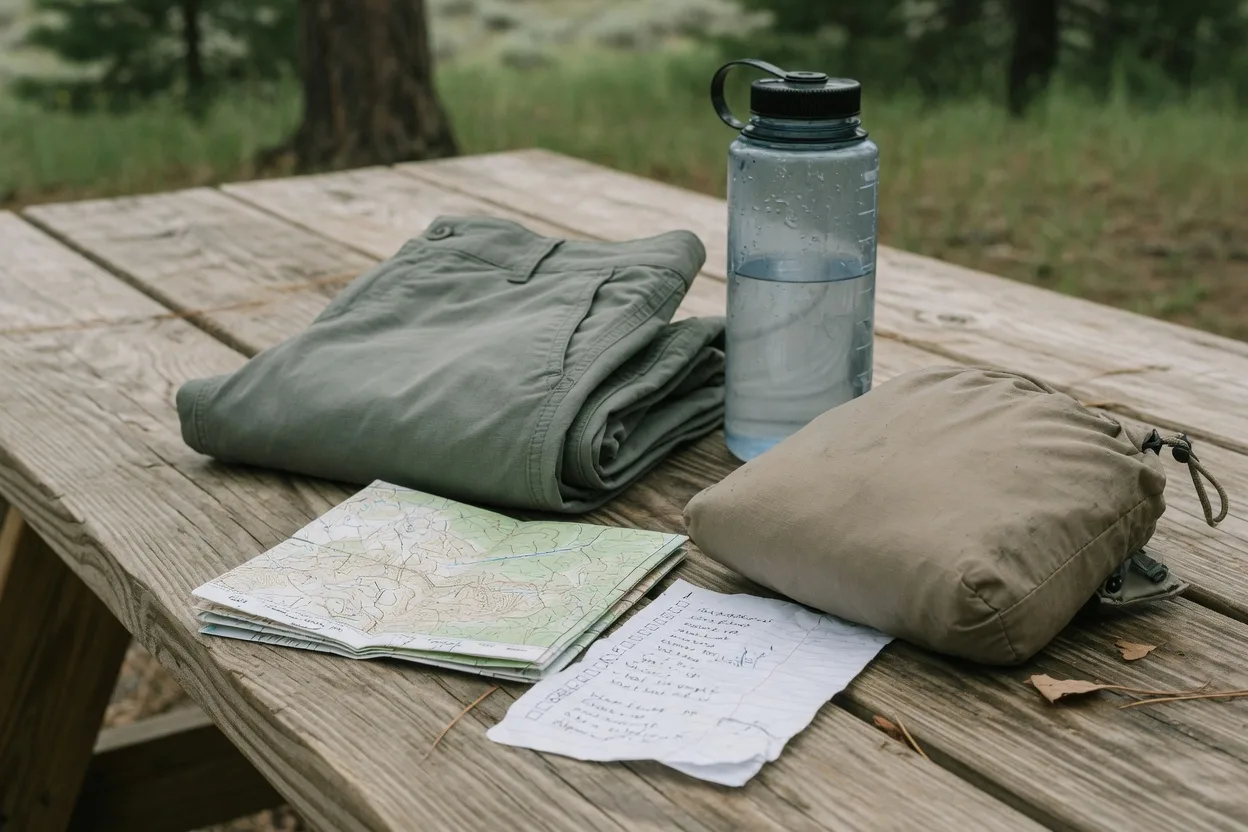
The short answer: decide on exposure first
Hot-weather pants are a trade between airflow and coverage. Shorts move the most air. Long pants block sun and keep brush and ticks off your skin. Which matters more depends on the trail, not the temperature alone.
The CDC says UV rays in the continental United States are strongest from 10 a.m. to 4 p.m. during daylight saving time, recommends long sleeves and long pants when possible, and says to reapply sunscreen if you are in the sun for more than 2 hours and after sweating or toweling off. [2] Grand Canyon National Park's summer guidance tells hikers to plan their day so they are not hiking between 10 a.m. and 4 p.m. at all, and lists sun-protection layers, a hat and sunscreen among essentials. [4]
So the first question is when and where you will be out. A 7 a.m. forest walk and a midday ridge walk call for different legs.
| Your hike | Sensible default | Why |
|---|---|---|
| Open, sunny trail during 10 a.m. to 4 p.m. | Long pants, light fabric | Covers legs during peak UV; no leg sunscreen to reapply every 2 hours [2] |
| Brushy or grassy trail, April to September | Long pants, consider permethrin-treated | Ticks are most active April to September; the CDC lists permethrin-treated clothing as an option [3] |
| Shaded, well-maintained trail, short outing | Shorts or leggings | Little sun or brush exposure; airflow wins |
| Mixed day: cool start, hot open finish | Convertible pants | Change coverage without carrying a second garment |
| Desert canyon in extreme heat | Avoid midday hiking entirely | The park advises against hiking 10 a.m. to 4 p.m. in summer [4] |
What product pages tell you, and what they leave out
For heat, the useful specifications are the fabric blend, a stated UPF rating, fabric weight, whether the legs zip off, and any venting. Many product pages do not list all of them. Moosehill's HikerFlex M015 men's convertible, read on 30 October 2026, is a typical example: it lists 90% polyester and 10% spandex, quick-dry and breathable claims, zip-off legs that can also be partly unzipped for ventilation, and cuffs that roll up to a 7/10 length. It lists no UPF rating and no fabric weight. [5]
A missing number is not a bad result; it is an unknown. If sun protection is the reason you wear pants in summer, a pant with a stated UPF gives you a baseline you can check, while an unrated one depends on weave, colour and fit. Our UPF guide explains how to read those claims.
| Property | Why it matters in heat | Moosehill HikerFlex M015 (30 Oct 2026) |
|---|---|---|
| Fabric blend | Tells you it is synthetic and whether it stretches; does not by itself rank coolness | 90% polyester, 10% spandex [5] |
| Stated UPF | A checkable sun-protection number | Not listed [5] |
| Fabric weight | Lighter fabric usually means more airflow, but few pages publish it | Not listed [5] |
| Zip-off legs | Switch to shorts when shade or cooler air arrives | Yes; legs can also be partly unzipped to vent [5] |
| Roll-up cuffs | A middle option between pants and shorts | Roll up to a 7/10 length [5] |
| Ankle closure | Can be cinched to keep debris and ticks out | Hook-and-loop ankle tabs [5] |
Colour, fit and sweat: the sun-protection trade-offs
The Skin Cancer Foundation says dark or bright colours absorb UV and protect more, densely woven fabric protects more than sheer or loosely woven cloth, tight clothing can stretch and lose protection, and fabric that gets wet loses some protective ability. It defines UPF 50 as letting about 2 percent of UV through, and rates UPF 30 to 49 as very good and 50+ as excellent. [1] The CDC makes the same points: tightly woven fabric gives the best protection, a wet shirt protects less than a dry one, and darker colours may protect more than lighter ones. [2]
For an exposed summer trail, that points to a darker or UPF-rated pant in a relaxed cut. Fit matters as much as colour, because a pant stretched tight over bent knees protects less, and a sweat-soaked pant protects less than a dry one. [1][2]
Grand Canyon's summer guidance adds a different angle: in the desert it suggests clothing that holds water, notes that cotton is great there, and tells hikers to soak their clothes and a hat at every chance to cool down. [4] That is the opposite of the usual quick-dry advice, and it applies to dry desert heat with water available on the route. In humid heat, wet cotton simply stays wet.
Ticks: the reason to keep long legs on anyway
The CDC says tick exposure can happen year-round but ticks are most active in warmer months, April to September, which overlaps exactly with the season people switch to shorts. Its prevention advice includes walking in the centre of trails, treating clothing with permethrin or buying permethrin-treated clothing, and doing a full-body check after being outdoors. [3]
In practice that means long pants on brushy or grassy trails in tick country, even on hot days, with a convertible pant zipped back on for the overgrown sections. Our tick-season guide covers permethrin treatment and how to wear pants to keep ticks out.
Who should just wear shorts or leggings
- Short hikes on shaded, maintained trails where you are back before late morning.
- Hikers who will not take convertible legs off in practice; you are carrying a knee seam for nothing.
- Trail runners and fast hikers who value airflow over brush protection, with sunscreen reapplied every 2 hours in the sun. [2]
- Anyone hiking in a region and season with few ticks, on open trail, who is diligent with sunscreen. [2][3]
A hot-weather pants checklist
- Check the hike's timing and exposure: will you be in the sun between 10 a.m. and 4 p.m.? [2]
- Check tick season and trail type: April to September, brush or tall grass? [3]
- On the product page, record fabric, UPF and weight; treat any missing value as unknown. [5]
- Choose a relaxed fit so the fabric is not stretched over your knees. [1]
- If you choose convertible pants, confirm the legs zip off over your shoes and practise it at home.
- Pack sunscreen for any skin the pants leave exposed, and reapply it every 2 hours in the sun. [2]
Questions before you decide
Are long pants or shorts better for hiking in the heat?
It depends on exposure. The CDC recommends long pants when possible to block UV, which is strongest from 10 a.m. to 4 p.m. in daylight saving time, and ticks are most active April to September. On short, shaded, tick-free hikes, shorts are fine.
Do light-coloured hiking pants protect from the sun?
Less than dark ones, other things equal. The Skin Cancer Foundation says dark or bright colours absorb UV, and the CDC says darker colours may protect more than lighter ones. A stated UPF rating is the more reliable guide.
Is cotton bad for hiking in hot weather?
Not always. Grand Canyon National Park's summer guidance says cotton is great in the desert because it holds water, and suggests soaking clothing to stay cool. In humid heat, wet cotton stays wet.
Does the Moosehill HikerFlex M015 have a UPF rating?
Its product page, read on 30 October 2026, lists 90% polyester and 10% spandex, zip-off legs and roll-up cuffs, but no UPF rating and no fabric weight.
Sources & verification
Product details and prices can change. Check the linked provider before buying.
- The Skin Cancer Foundation: Sun-Protective Clothing Accessed 30 Oct 2026
- CDC: Sun Safety Facts Accessed 30 Oct 2026
- CDC: Preventing Tick Bites Accessed 30 Oct 2026
- Grand Canyon National Park (NPS): Summer Hiking - Hike Smart Accessed 30 Oct 2026
- Moosehill: Men's Convertible Hiking Pants Quick Dry Cargo Pants - HikerFlex M015 Accessed 30 Oct 2026
Sources link directly to providers. Product buttons may use separately labeled affiliate links. Read our disclosure.