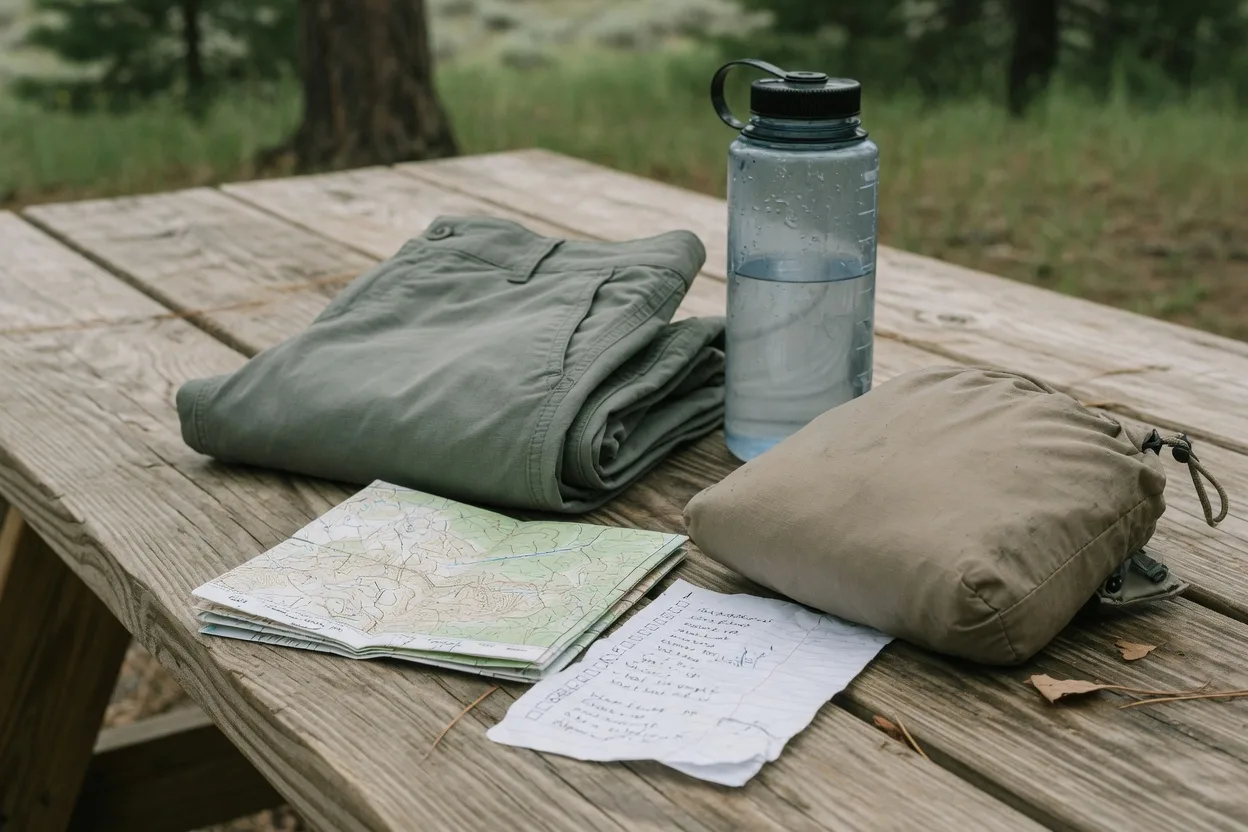
Water-repellent is a surface finish, not a barrier
GORE-TEX describes DWR, durable water repellent, as an ultra-thin coating that makes water bead up and roll off the outer layer instead of being absorbed, and says to reapply it when water no longer beads after washing. [1] Many hiking pants carry a finish like this. Moosehill's HikerFlex M015, for example, is described as water-repellent and quick-dry, with no waterproof claim. [2]
Rain pants add a waterproof layer under that finish. The DWR keeps the face fabric from soaking; the waterproof layer is what actually stops water reaching your legs when rain keeps falling. This guide is about choosing between them; for washing and restoring a DWR finish, see the care guide on this site.
Read the forecast the way it is written
The National Weather Service defines probability of precipitation as the chance that a specific forecast point receives at least 0.01 inch of rain. A 40 percent chance of showers means a 40 percent probability of at least 0.01 inch at that point. [3] It does not tell you how long or how hard it will rain, so pair the percentage with the hourly forecast and the forecast discussion before deciding what to leave at home.
Scenario table by rain duration and temperature
This is editorial guidance built on the definitions above and the hypothermia advice below, not a test of specific garments.
| Scenario | Water-repellent pants alone | Add rain pants? |
|---|---|---|
| Warm, low chance, short loop near car | Usually enough | Optional |
| Warm, brief showers expected | Beads off at first, may wet through | Optional; carry if over 2-3 hours |
| Cool or windy with any rain chance | Wet fabric chills quickly | Yes |
| Steady rain for hours | Will soak through | Yes |
| Higher elevation or remote trail | Weather can turn | Yes, in any season |
| Wet brush or long wet grass, no rain | Legs get soaked from contact | Often worth it |
Why cool rain changes the answer
The National Park Service advises packing rain gear for any hike, wearing clothing that wicks away moisture, and notes that hypothermia can happen even in summer. [4] The Appalachian Trail Conservancy calls the outer rain layer essential no matter the season or the weather, and says clothing for cold and rain is a must even in midsummer, especially at higher elevations. [5] Water-repellent pants that eventually wet through are fine when you are warm and near the car; they are a weak plan when you are cold, wet and an hour from shelter.
When a cheap rain shell over hiking pants is the right call
If you hike mostly in warm conditions and only need rain pants a few times a year, an inexpensive waterproof shell pant worn over ordinary hiking pants is a reasonable compromise. It lives in the pack, comes out when rain sets in or temperatures drop, and keeps your regular pants dry underneath. Spend more when you hike often in sustained rain, where breathability and durability matter more.
- Weigh the rain pants on a kitchen scale and decide whether that weight is worth it for the trip.
- Check that they fit over your hiking pants and boots, or have ankle zips.
- Look for a stated waterproof claim, not only water-resistant or water-repellent.
- Test that water still beads on your hiking pants; if not, the DWR needs attention.
Questions before you decide
Is water-repellent the same as waterproof?
No. A DWR finish makes water bead and roll off the surface, as GORE-TEX describes; a waterproof layer is what keeps water out in sustained rain.
What does a 30 percent chance of rain mean?
The National Weather Service defines it as a 30 percent chance that the forecast point gets at least 0.01 inch of rain. It does not describe duration or intensity.
Sources & verification
Product details and prices can change. Check the linked provider before buying.
- GORE-TEX Brand: Outerwear Care Instructions Accessed 30 Oct 2026
- Moosehill HikerFlex M015 men's convertible hiking pants product page Accessed 30 Oct 2026
- National Weather Service: What is the Meaning of PoP Accessed 30 Oct 2026
- National Park Service, Gauley River NRA: Hypothermia Accessed 30 Oct 2026
- Appalachian Trail Conservancy: Gear and First Aid Kits Accessed 30 Oct 2026
Sources link directly to providers. Product buttons may use separately labeled affiliate links. Read our disclosure.