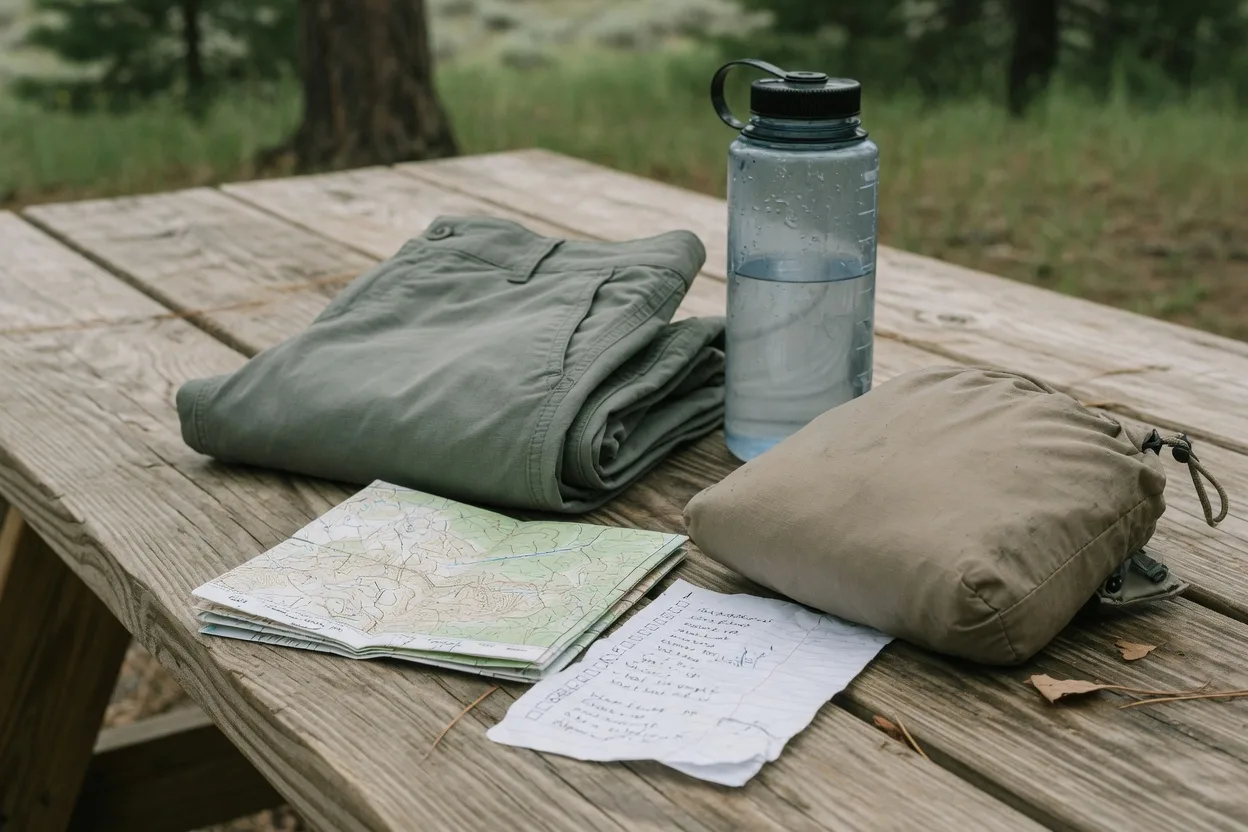
The real difference is construction, not marketing
Hiking pants are usually a woven synthetic with some stretch and a looser cut. As one example, Moosehill's HikerFlex M015 lists 90% polyester and 10% spandex with five pockets, one of them zip-closed. [1] Leggings are a close-fitting knit. That single difference drives most of the trade-offs: a loose woven layer sits away from the skin and can be tucked into socks, while a knit hugs the leg and moves with it.
This guide does not rank brands or claim test results. It applies published public-health guidance to the two garment types and leaves the abrasion judgement to the reader with clear reasoning.
Trail-condition comparison
Use the row that matches most of your hiking, not your hardest single day.
| Condition | Hiking pants | Leggings | Lean toward |
|---|---|---|---|
| Groomed trail, mild weather | Fine, slightly warmer | Comfortable, unrestricted | Either |
| Brushy or overgrown trail | Loose woven layer between skin and branches | Thin knit sits directly on skin | Hiking pants |
| Rock scrambles, sitting on rock | Looser woven layer; check seat and knee construction | Close-fitting knit takes contact directly; check any abrasion claim | Hiking pants |
| Tick habitat | Long; choose light colours and tuck into socks | Long; choose light colours and pull socks over the cuff | Either, if light-coloured and tucked |
| Strong sun | Coverage; tightly woven fabric protects best | Coverage, but stretched fabric can protect less | Hiking pants |
| Hot, humid, short walk | Can feel warm; convertibles can vent | Breathes with movement, no flapping | Either |
| Carrying phone, keys, snacks | Count pockets on the listing; the M015 lists five, one zipped | Count pockets on the listing | Whichever has a closed pocket |
Ticks: what the guidance actually says
The National Park Service advises long sleeves and long pants, tucking pants into socks, light-coloured clothing so ticks are easy to spot, hiking in the centre of trails, and treating clothing and gear with permethrin. [2] Delaware Water Gap's tick page recommends long pants in light colours and says tucking pants into socks adds a barrier that keeps ticks from your skin. [3] The CDC recommends 0.5% permethrin on clothing and tumble drying dry clothes on high heat for 10 minutes after coming indoors. [4]
Leggings already cover the leg to the ankle, so they meet the long-pants part. Where they can fall short is colour: the guidance favours light colours so ticks are easy to spot, and a dark legging works against that. If you hike in leggings in tick season, light colours, socks pulled over the cuff and a tick check afterwards close most of the gap.
Sun and pockets
The CDC says tightly woven fabric offers the best sun protection and that darker colours may protect more than lighter ones. [5] The Skin Cancer Foundation notes that tight clothing can stretch and lose protection, and wet or stretched fabric loses some of its protective ability. [6] A legging stretched over the knee is the textbook case, so on long exposed days a looser woven pant is the more dependable choice unless the legging carries its own UPF rating.
Pocket count is the easiest thing to check before buying. The M015 lists two front, two side and one zip-closed rear pocket. [1] For a legging, check the listing for pocket count and whether any pocket closes; an open side pocket can lose a phone on a scramble.
Quick checklist and when leggings win
Leggings are the better choice on maintained, open trails in mild to cool weather, for fast hikes where flapping fabric is annoying, and when you already own a pair. Hiking pants win as soon as the trail turns brushy, rocky or tick-heavy.
- Will you push through brush or sit on rock? Pick woven pants.
- Tick habitat? Choose light colours and tuck into socks, whichever you wear.
- More than an hour of midday sun? Prefer tightly woven fabric or a stated UPF.
- Need a phone and keys secured? Count zip or closed pockets on the listing.
- Short groomed walk? Wear what you have.
Questions before you decide
Are leggings okay for hiking in tick season?
They cover the leg, but Park Service guidance favours light-coloured long pants tucked into socks. Light leggings with socks over the cuff and a tick check afterwards follow the same idea.
Do leggings protect from the sun?
They add coverage, but the Skin Cancer Foundation notes stretched or wet fabric loses some protection, and the CDC says tightly woven fabric protects best.
Sources & verification
Product details and prices can change. Check the linked provider before buying.
- Moosehill HikerFlex M015 men's convertible hiking pants product page Accessed 30 Oct 2026
- National Park Service: Ticks and Tickborne Diseases Accessed 30 Oct 2026
- National Park Service, Delaware Water Gap NRA: Tick Safety Accessed 30 Oct 2026
- CDC: Preventing Tick Bites Accessed 30 Oct 2026
- CDC: Sun Safety Facts Accessed 30 Oct 2026
- The Skin Cancer Foundation: Sun-Protective Clothing Accessed 30 Oct 2026
Sources link directly to providers. Product buttons may use separately labeled affiliate links. Read our disclosure.