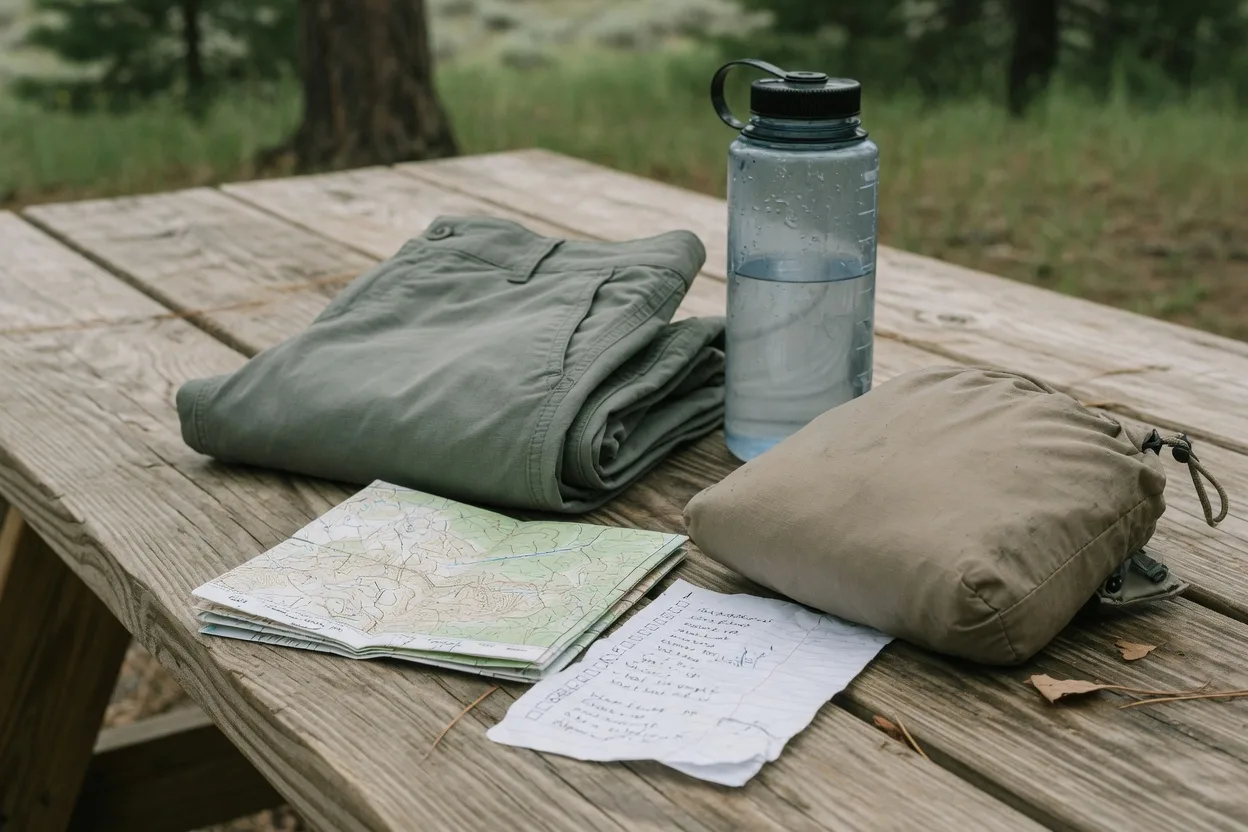
Why an all-day sit needs a different pack
A blind sit is mostly stillness after a short, often sweaty walk in. That combination is what makes people cold. The CDC notes that hypothermia can happen even above 40 degrees Fahrenheit when a person is chilled by rain, sweat or cold water, and lists shivering, exhaustion, confusion, fumbling hands and drowsiness among the warning signs in adults. [1] A ground blind cuts wind but is not a heated room: TideWe's own product FAQ for its Vis360 blind says strong wind and rain can lightly pass through the see-through material, and that the blind has no floor. [5]
This guide is a research checklist. We have not run a timed sit test, and nothing here replaces your state's hunting regulations or hunter education course.
Safety items go in your pockets, not the bottom of the pack
New York's DEC tree stand guidance tells hunters to carry emergency equipment such as a knife, cell phone, flashlight and whistle in their pockets at all times, and to let someone know where they will be hunting and when they will return, ideally with a map of the stand location. [2] The same logic applies on the ground: if you are hurt or disoriented, you need those items on your body.
Minnesota DNR's 2026 season release asks that every member of a hunting party know where everyone will be hunting so they know where it is safe to shoot. [3] Wisconsin DNR's safety release repeats the four firearm rules: treat every firearm as loaded, always point the muzzle in a safe direction, be certain of your target and what is before and beyond it, and keep your finger outside the trigger guard until ready to shoot. [4] A blind narrows your view to a few windows, so knowing where your partners are matters more, not less.
Blaze orange rules for blinds vary by state and are covered in our separate guide. Minnesota's release reminds hunters to check the regulations for when orange must be worn or displayed on a ground blind, [3] and Wisconsin's release says faded or stained orange clothing is unsafe, may not be legal and should be replaced. [4]
Priority table for a long sit
We are not quoting item weights because we have not weighed a kit and the agency sources do not publish them. The one physical constant worth remembering is that a liter of water weighs about a kilogram, or roughly 2.2 pounds. Use the priority column to decide what stays when the pack is too heavy.
| Item | Priority | Where it rides | Why |
|---|---|---|---|
| Phone, flashlight or headlamp, whistle, knife | Must carry | Pockets | NY DEC lists these as emergency equipment to keep on your body [2] |
| Written plan left at home (location map, return time) | Must do | With someone else | NY DEC and Minnesota DNR both stress knowing where hunters are [2][3] |
| State-required orange garment or blind panel | Must carry where required | Worn or on the blind | Rules differ by state; see the blaze orange guide [3][4] |
| Insulating layers, hat, gloves | Must carry when cold | Pack, put on at the blind | Sweat from the walk in can chill you once still [1] |
| Rain shell | High | Pack | See-through walls can let wind and rain through in strong weather [5] |
| Seat you can sit on for hours | High | Carried or left in the blind where allowed | The blind has no floor [5]; comfort decides how long you stay still |
| Water and food | High | Pack | A full day without either makes the cold harder to manage |
| First-aid kit and personal medications | High | Pack, top pocket | Check expiration dates before the season |
| Dark upper-body clothing | Medium | Worn | Manufacturer advice to keep the back of the blind dark and avoid a silhouette [6] |
| Scent-control routine | Medium | Before you leave home | A blind hides movement, not scent [6] |
Scent and light discipline inside the blind
Two manufacturer statements are worth taking at face value. TideWe's beginner setup article says a blind hides movement but does not hide scent, and recommends setting up so the wind carries your scent away from where game is likely to approach. [6] The Vis360 FAQ adds that the perforated see-through material lets scent travel, so wind direction still matters. [5] Packing more scent products does not change the wind; choosing the blind position does.
On light, the same article advises keeping the back side of the blind dark, avoiding a clear silhouette of your body, and opening only the windows you need. [6] In practice that means dark clothing on your upper body, a headlamp switched off once you are inside, and a phone screen dimmed or put away when animals could be in view.
Worked example: a cold morning sit
Suppose the forecast is below freezing at dawn, the walk to the blind takes 20 minutes, and you intend to stay until early afternoon. This example is an illustration, not a tested clothing system.
Walk in with a thin base layer and your outer shell open, carrying the heavier insulation in the pack so you arrive with as little sweat as possible. At the blind, put on the dry insulation, hat and gloves before you start to feel cold. Keep the flashlight, whistle, knife and phone in your pockets as NY DEC recommends. [2] Set the seat, close the windows you will not shoot through, and lay out food and water within reach so you are not digging in the pack later.
Watch for the CDC warning signs in yourself: shivering that will not stop, fumbling hands or drowsiness are reasons to stand up, move, eat and, if needed, end the sit. [1] Before you leave, check that the person holding your plan knows you are walking out.
Night-before checklist
Read this with your state's current regulations open, especially for orange requirements and any rules about leaving a blind or seat on public land overnight.
- Plan written down: blind location, partners' locations, expected return time; copy left with someone at home
- Pocket kit: phone charged, flashlight or headlamp, whistle, knife
- Required orange garment and any orange panel for the blind, checked against your state's current rules
- Insulating layers, hat and gloves packed dry; rain shell
- Seat you have actually sat on for an hour or more
- Water, food, first-aid kit and personal medications
- Dark top for inside the blind
- Wind forecast checked against the blind's position
Questions before you decide
Does a ground blind block scent?
No. TideWe's setup article says a blind hides movement but not scent, and its Vis360 FAQ says scent can travel through the see-through perforations, so wind direction still matters.
Where should I carry my phone and flashlight?
New York DEC's tree stand guidance says to keep emergency equipment such as a knife, phone, flashlight and whistle in your pockets at all times rather than in a pack, and the same reasoning applies on the ground.
Can I get hypothermia if it is not freezing?
Yes. The CDC says hypothermia can occur at cool temperatures above 40 degrees Fahrenheit if a person is chilled by rain, sweat or cold water.
Sources & verification
Product details and prices can change. Check the linked provider before buying.
- CDC: Preventing Hypothermia Accessed 30 Oct 2026
- New York State DEC Hunter Education: Tree Stand Safety Accessed 30 Oct 2026
- Minnesota DNR: Prioritize safety as archery deer, small-game hunting seasons kick off (17 September 2026) Accessed 30 Oct 2026
- Wisconsin DNR: Make Safety Your #1 Target This Hunting Season (13 November 2023) Accessed 30 Oct 2026
- TideWe Vis360 See Through Ground Blind product page and FAQ Accessed 30 Oct 2026
- TideWe: Best Ground Blind Setup for First-Time Hunters Accessed 30 Oct 2026
Sources link directly to providers. Product buttons may use separately labeled affiliate links. Read our disclosure.